
Walk into any outdoor retailer and you'll find dozens of products that give the customer the ability to do the sport they want to at that moment.
Multiple surf brands make flexible wetsuits, multiple climbing shoes claiming to help them climb better, and multiple backpacks to help them get through a day hike.
Many of the brands blend together and people buy the cheapest option, but there are a few brands that are priced 2X, 3X, even 10X the competitors and people have
such a fierce loyalty to the brand that they pay it. Happily. Then they walk around all day long feeling like they are on top of the world because they own one item with a specific logo on it.
Why?
Because customers don't buy from brands they know. They buy from brands they trust.
This trust has very little to do with product specifications.
Customers buy from brands they trust because they see evidence that the brand will help them accomplish what they want to do, or become who they want to become.
What Makes People Trust a Brand?
Most outdoor brands spend an egregious amount of time bragging all about their product features.
They highlight materials, construction methods, durability, performance metrics, and technical specifications.
While those things matter, they are rarely the primary reason someone chooses one brand over another, because a customer will hear all of that and not understand a single thing that it means.
Confused people don’t buy.
Think of it this way, if I wrote this blog post and told you - “My videos are the best. I shoot everything on my Canon R6 Mark II with a 24-70 f/2.8 in C-LOG3 Cinema Gamut. That way I can edit them with the most color options and give you a video delivered in 4k and 32 bit audio."
You probably wouldn’t know, or care what any of that means. You probably just skipped over the whole sentence so that you wouldn’t waste brain power reading something you won’t understand.
VS if I told you - “If you’re struggling to connect your audience to your product, I can help make you a video that will bridge that gap and create a loyal audience.”
You’d perk up. You may not fully trust me yet, but you trust me more because I am speaking your language. You probably feel like I understand you.
A surfer isn't just purchasing boardshorts. They're buying into a lifestyle centered around freedom, adventure, and time spent in the ocean.
A climber isn't just purchasing a jacket. They're investing in a version of themselves that pushes limits and explores new terrain.
A trail runner isn't buying shoes because of the foam technology. They're buying a tool that helps them become stronger, healthier, and more capable.
The product is important, but the identity attached to the product is what creates trust, if you can speak the customer's language and explain to them how you will help them be who they want to be, or achieve a goal they want to achieve, they don’t care how. They care that you can help, and that builds trust.
The Best Brands Sell Identity
Think about the brands that have a really strong, loyal audience.
Their marketing rarely revolves around product specifications alone.
Instead, they focus on the people who use their products and the experiences those products make possible.
Nobody wants a $400 Hooded 5/4.
They want to surf in 43 degree water and be confident that they can surf for hours without getting cold.
If a customer sees a brand sponsored video of someone surfing in Iceland in their hooded 5/4, and they stay out there for hours, the next time that customer goes to purchase a hooded 5/4 they will think back to that video and buy the wetsuit with the logo that sponsored it.
That is a direct tie to how identity sells, and how brands create trust with so many people.
Real Life Example: Hurley
One of the most interesting examples of brand trust in the surf industry is Hurley.
For years, Hurley was one of the most respected names in surfing.
They invested heavily in athletes, storytelling, and surf culture. Their films showcased world-class surfers and the lifestyle surrounding the sport. Projects like View From a Blue Moon, Hurley Youth, and Hurley Surf Club made it feel like if someone had a black wetsuit with 2 white bands on the leg, they were the greatest surfer at their local.
I know that’s true, I was that customer and my best result was a 3rd place finish at my local comps.
Then things changed. Hurley was sold, much of the team was cut, and the investment in surf films and storytelling largely disappeared. This looked like a good financial decision on paper, but this mistake ended up costing them the entire brand, now Hurley is the joke brand of the surf industry.
Today, if you search "Hurley" on YouTube, you'll find videos about Coach Bob Hurley, Dan Hurley from UConn, and if you scroll far enough, you'll eventually find a surf video from 7 years ago.
Surfers stopped seeing Hurley showing up in the places that mattered, and they stopped creating the content that made so many people get excited about the brand.
This happened in a matter of about a year, practically an overnight decline for a brand of this magnitude.
The lesson for brands is simple: trust isn't built through products alone. It's built by consistently showing customers that you understand their world and are actively participating in it.
Why Many Brands Struggle to Earn Trust
The product is very rarely the issue, most brands make really great products and apparel. The problem is that they have a difficult time making sure their brand is relatable to the customer.
In my experience, there are three common reasons this happens…
They Focus Only on Products
Features are important, but if your product is truly different, explain why. Don’t list the features, list the benefits. Example: Don’t say “Our patented XYZ material is made of a new ABC product that’s been weather tested down to -4 degrees.” Say “Our new XYZ material is going to keep you warm where warmth doesn’t exist.”
Features alone rarely inspire loyalty.
Customers want to understand how a product fits into their lives and helps them achieve their goals, or how it will make their experiences doing what they want to do better.
When a brand only talks about products, it becomes difficult for customers to connect emotionally.
Their Message Isn't Clear
Many brands know what products they sell, few brands can articulate why it matters.
If customers can't immediately understand what makes a brand different when they visit your website or watch a video of your products, trust becomes much harder to build.
Confusion creates hesitation. If someone has 2 similar products and similar price ranges, they’ll probably hold off a week on buying because they don’t know what’s different.
Once that differentiation has been articulated clearly, they will buy the product they associate with.
Their Visual Content Doesn't Support Their Story
A brand's photos and videos should reinforce its message.
If a company claims to represent adventure, community, exploration, or performance, customers should see those values reflected throughout its content.
Except this gets missed a lot because people work so hard on the products, they want to list off the features instead of making this product a reinforcing image of their brand.
Think about it, if you claim to sell adventure but then list off all the features of a new gri-gri, you’ll appeal to engineers and not adventurers.
Make sure you sell to your adventurers.
A Real Example: Selling a Lifestyle Instead of Apparel
Recently, I worked with a client who wanted social media content for an apparel launch.
The products looked great.
But as we discussed the campaign, the message wasn't entirely clear.
The conversation kept coming back to the idea of “we want to sell our apparel."
The challenge was that every apparel brand wants to sell apparel. That alone won’t inspire transformation in the audience.
As we continued talking, I asked what the name of the collection was.
"Carolina Summer."
Bingo. The entire campaign changed at that moment because now I could come up with a direction and a story that the audience would relate with.
Instead of creating content that said:
"Here are our clothes."
The campaign could communicate something much bigger:
"Live Your Carolina Summer."
Now the focus wasn't on shirts, hats, or shorts.
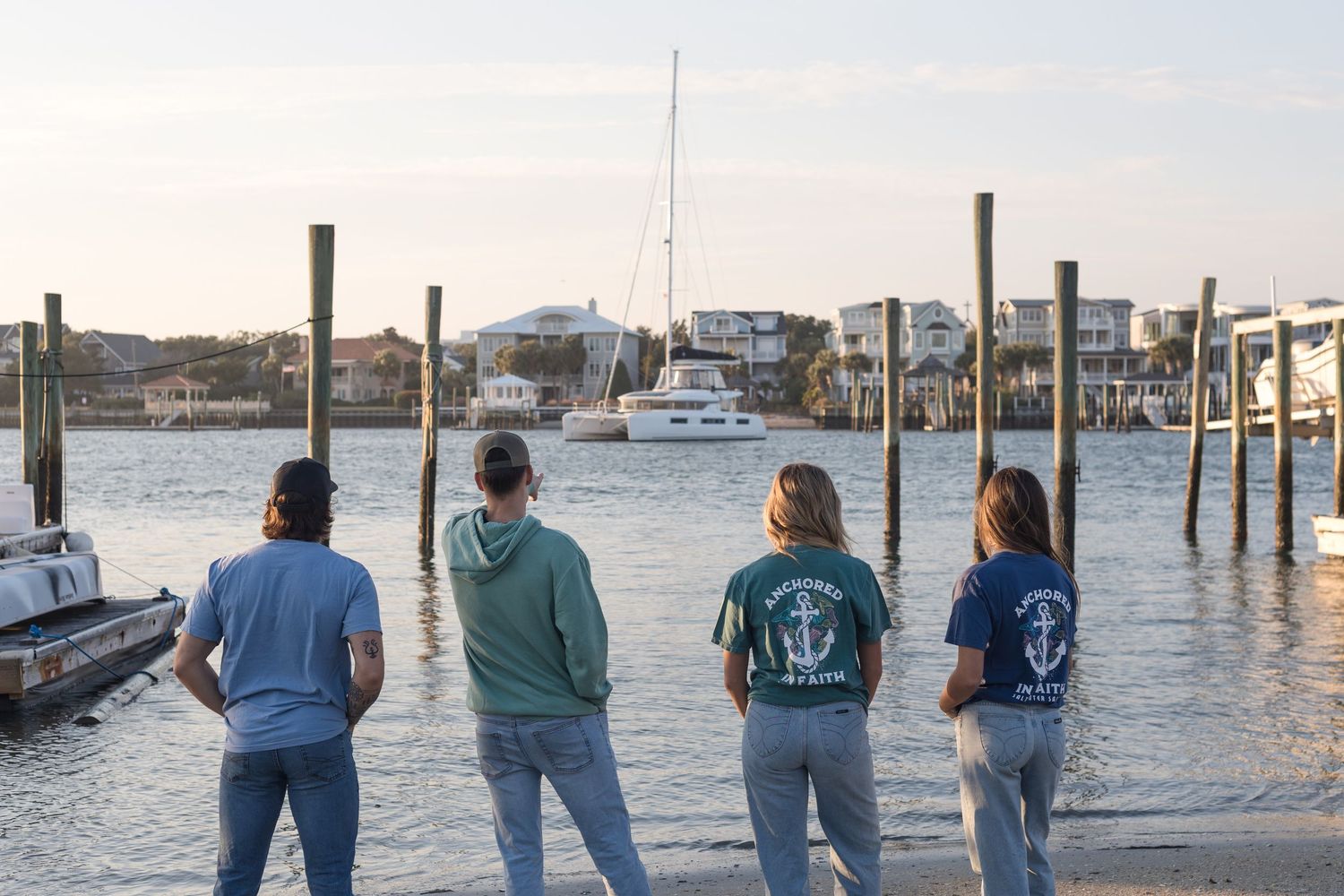
The focus became beach days, surf sessions, sunsets, boardwalks, friendships, and the coastal lifestyle people dream about experiencing.
The apparel became the embodiment of the story, not the story itself.
That’s where trust is built and where customers start seeing the brand as something that helps them become the person they want to be.
How Brands Build Trust Faster
Building trust takes time, but there are a few ways brands can accelerate the process.
Create a Clear Brand Story
Customers should quickly understand what your brand stands for and who it's for.
You can’t just say this internally and expect people to catch on. You have to show them, you want your customer to rattle off what you stand for and who you are without having to tell them what to say. It should permeate your content.
A good way to do this is by making a brand film so that people can see what your brand is. A good brand film can live on your homepage for years and be what defines (or redefines) who your brand is and what you stand for in the eyes of your ideal customer.
Stay Consistent
Trust is built through repetition and connection. Social media is huge for this.
Another huge mistake I see brands make is forgetting that social media is primarily supposed to be social! Interact with your customers, reply to comments that tag you, respond to DM’s.
If you only show products and advertise on socials, your customers will stop caring about you because your brand will seem like an elusive being rather than someone connected to their audience.
Don’t just do this for a week and expect results. This has to become a part of how you run your socials from now on, if you’ll take it seriously. The brands that earn loyalty are often the brands that consistently communicate the same values over time.
Invest in Visual Storytelling
Photography and video are some of the most powerful trust-building tools available to outdoor brands.
A strong brand film, campaign video, or lifestyle photography campaign can communicate emotion, identity, and purpose far more effectively than product descriptions alone.
Just keep the same principles in mind, don’t photograph or film the product all the time. Shoot the product 20% of the time, and the people using it/the story around it 80% of the time.
Final Thoughts
Customers don't trust outdoor brands because of logos, clever taglines, or technical specifications.
They trust brands that consistently show up in their world, speak their language, and prove they understand the life their customers want to live.
The brands that win aren't always the ones with the best products. They're the ones with the clearest, most authentic story — and the campaigns to back it up.
If you're an outdoor brand and you want a starting point for building those campaigns, I put together The Outdoor Brand Campaign Blueprint. It walks you through how to plan visual campaigns that clarify your brand story, connect with the right audience, and give you a complete creative direction before production begins.
Trust isn't built in a single campaign or a single piece of content. It's built by showing up the same way, over and over, in the places your customers already are. Do that consistently, and the right people will find you — and stay.